
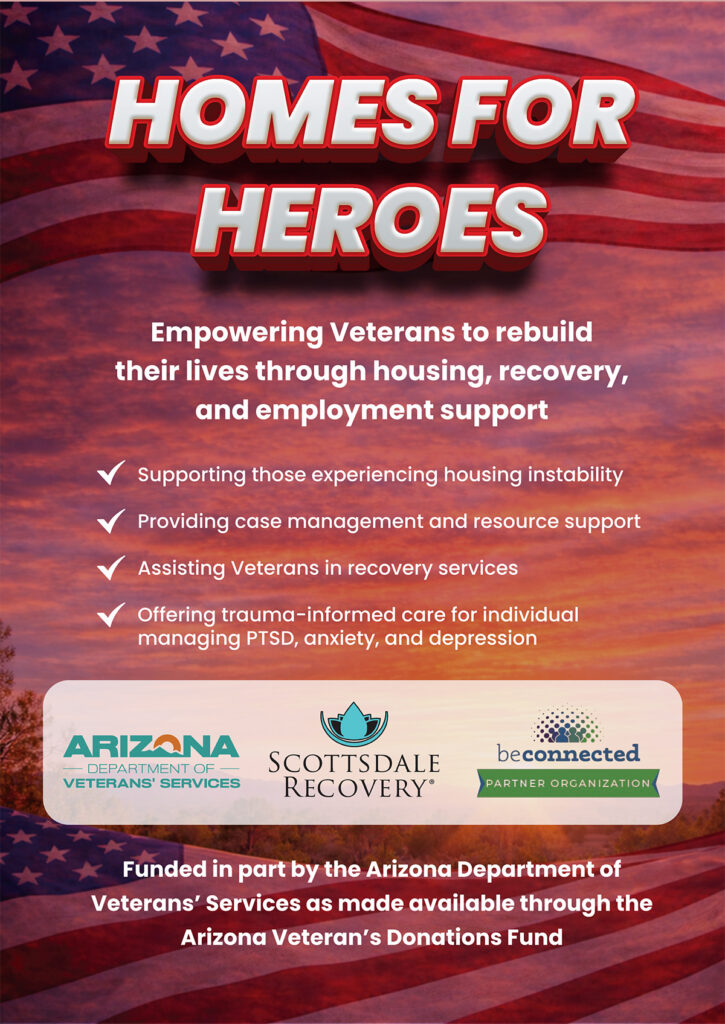




Scottsdale Recovery Center’s Homes for Heroes helps veterans rebuild their lives by addressing the social determinants of health that impact long term stability and recovery. The program provides safe housing, case management, and connections to essential community resources. It supports veterans experiencing housing instability and helps them develop the tools needed to regain independence.
Scottsdale Recovery Center is also a Be Connected partner organization, helping veterans access a statewide network of support services and resources. By connecting veterans to housing support, skill building, and workforce development opportunities through our CARE Academy, Homes for Heroes supports veterans to move forward with stability, dignity, and renewed purpose.
This initiative is funded in part by the Arizona Department of Veterans’ Services through the Arizona Veterans’ Donations Fund.
Despite being more likely to die of liver disease, Native Americans are far less likely to make the transplant list than Whites
Excessive and/or long-term drug intake create a physiological imbalance, compromising overall health and reducing the body’s natural ability to heal. These are the effects of chemical dependency in anyone using prescription, illicit or recreational drugs. But there are other circumstances within tribal nations that exacerbate the cycle of addiction and the difficulty in getting help.
Underemployment, underwhelming living conditions and lack of available healthcare services that support wellness often leave the peoples in this community without the resources necessary to find another way, let alone have a choice in experiencing a better life.
Collectively, it leads many to an existence where alcohol and drugs are primary coping mechanisms to mask the overwhelming pain felt on mental, physical and spiritual levels.
Now, Hopi health workers are offering real help
People with alcohol use disorder (AUD) have an increased risk in developing a mental health condition, such as depressive, bi-polar and anxiety disorders. When drug or alcohol dependency occurs simultaneously with a mental illness, it is referred to as a co-occurring disorder or dual diagnosis. Whether the mental health issue led to self-medicating or drug addiction created the mental disease, those who live with dual diagnosis, left untreated, struggle immensely.
Alcoholism within the Native American community is more prevalent than in the general population, and according to the Centers for Disease Control, makes them more prone to develop diabetes and kidney failure.
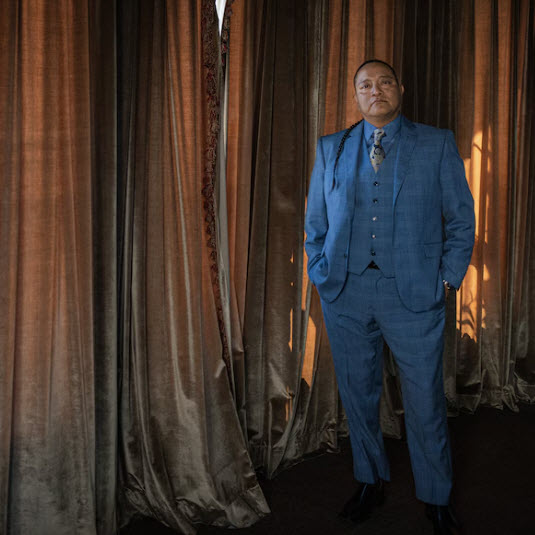
An article by Lee Yaiva, CEO of Scottsdale Recovery. Click the link below the download the full article.
Excessive and/or long-term drug intake create a physiological imbalance, compromising overall health and reducing the body’s natural ability to heal. These are the effects of chemical dependency in anyone using prescription, illicit or recreational drugs. But there are other circumstances within tribal nations that exacerbate the cycle of addiction and the difficulty in getting help.
Underemployment, underwhelming living conditions and lack of available healthcare services that support wellness often leave the peoples in this community without the resources necessary to find another way, let alone have a choice in experiencing a better life. Collectively, it leads many to an existence where alcohol and drugs are primary coping mechanisms to mask the overwhelming pain felt on mental, physical and spiritual levels.
An article by Lee Yaiva, CEO of Scottsdale Recovery. Click the link below the download the full article.
Now, Hopi health workers are offering real help
Despite being more likely to die of liver disease, Native Americans are far less likely to make the transplant list than Whites